
Vintage Drinks Cabinets: Retro Drinks Cabinets from the 1950s and 1960s

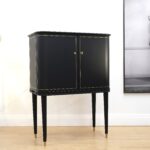
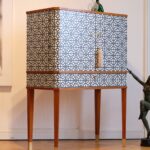
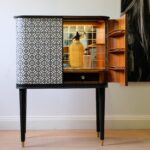
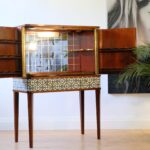
Retro drinks cabinets are among the most sought-after pieces for anyone who wants to combine function with clear design character. In the middle of the 20th century, the drinks cabinet developed from a practical storage piece into a distinct statement of interior design: something that could display glasses and bottles and at the same time serve as an elegant focal point in the room.
Today, retro drinks cabinets are valued for their balance of form and function. They are often made of solid wood, with carefully designed details and proportions that make them look as much at home in modern flats as when they were made.
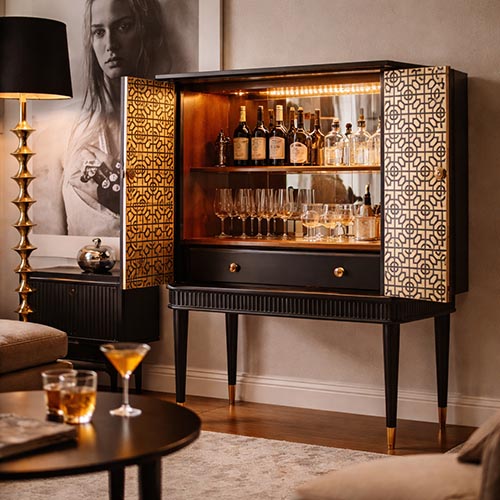
What Defines a Retro Drinks Cabinet?
Retro drinks cabinets from the 1950s and 1960s are typically characterised by clean lines, solid materials and a clear focus on function. Much of the furniture of this period was designed to be practical and aesthetically pleasing at once, which is why it still works so well in today’s interiors.
- Solid woods such as teak, oak or mahogany
- Slender legs and clear proportions
- Details in brass or metal
- Well-considered storage for bottles and glasses
This combination of material and design often makes retro drinks cabinets look elegant and timeless at the same time.
Vintage Drinks Cabinets from the 1950s and 1960s
In the post-war years, the sociable areas of the home grew ever more important, and the drinks cabinet took on a clear role in many households. Vintage drinks cabinets from the 1950s and 1960s were therefore often designed for the living or dining room, where they could be used and displayed at the same time.
The typical materials of the era, especially teak and other darker woods, give the furniture a warm, exclusive feel. At the same time, the clean lines allow it to combine well with modern furnishings.
When Old Drinks Cabinets Are Given a New Lease of Life
Many surviving retro drinks cabinets still have a very high basic quality. Through restoration and redesign, these pieces are given a new look without losing their original character.
That is exactly what makes redesigned furniture so interesting: it combines older craftsmanship with modern design decisions and creates pieces that look both historic and contemporary.
Retro Drinks Cabinets in Modern Interiors
A retro drinks cabinet often acts as the natural centrepiece of the room. It can stand in the living room, the dining room or an open-plan space, where it is both storage and a striking piece of design furniture.
Many people also appreciate that the piece can be used in more than one way: as a classic drinks cabinet, as a display cabinet or as a combination of the two.
You will find examples of redesigned drinks cabinets in our current range: Drinks cabinets and display cabinets.
A Piece With History and Character
Retro drinks cabinets stand for an era of design history in which furniture was built to last and to be used every day. The combination of solid materials, clear form and practical function means they still feel relevant in today’s homes.
For many people, this is exactly what makes retro drinks cabinets so attractive: furniture with history and personality that is fully usable in a modern home.
Vintage Drinks Cabinet: 1950s or 1960s? How to Tell the Decades Apart
At first glance the two decades look alike, but not in the detail. The 1950s are softer: rounded corners, light birch or elm, flaps with brass fittings, usually a mirrored back and a simple light bulb. The cabinets stand on a low plinth or short turned legs and still breathe Swedish Modern. The 1960s are stricter and more international: teak and rosewood, splayed or tapered legs, sliding doors, built-in bar compartments with a pull-out shelf, occasionally a small cooling compartment. A simple test is the legs: turned and straight usually means 1950s, splayed and tapered means 1960s. The whole era is described in the article Mid-century furniture.
What a Vintage Drinks Cabinet Costs and What Determines the Price
Unrestored retro drinks cabinets cost €150 to €800 at auctions and flea markets, depending on the wood and condition. Teak and rosewood are at the top, birch at the bottom. Stamped pieces by Bodafors or Tibro are more expensive than anonymous ones. Add to that 40 to 80 hours of work for sanding, veneer repair, new wiring and painting, plus materials. Restored and redesigned, our drinks cabinets generally cost €2,300 to €3,850 including delivery within Germany, with the mirror, lighting and interior in as-new condition. Current pieces can be found in the category Drinks cabinets, such as the black and white vintage drinks cabinet from the 1960s.
What to Check Before Buying a Retro Drinks Cabinet
- Veneer edges. Carefully lift the door edges with a fingernail. If veneer comes away, it can be repaired, but it should be reflected in the price.
- Wiring. Original wiring from the 1960s is a fire risk and must be replaced completely. Do not count on it working.
- Mirror. Blind spots in the silvering cannot be repaired, only replaced.
- Smell. Old drinks cabinets sometimes smell of spirits or mould. Spirits fade, but mould in chipboard does not.
- Legs. Check that all four are original and firm. Replaced legs reduce the value.
Frequently Asked Questions About the Retro Drinks Cabinet
Is retro the same as vintage?
Vintage is a genuine old piece, generally 20 to 100 years old. Retro only means that something looks old, and it may be newly produced. A drinks cabinet from 1962 is both vintage and retro; one from 2022 in the same style is only retro.
Can I paint a teak drinks cabinet black?
Yes, but teak is oily and needs thorough degreasing and priming for the paint to hold. We do this in the workshop with a spray gun. A cabinet with intact, attractive teak veneer we often leave as it is.
Do today’s bottles fit in a drinks cabinet from the 1960s?
Not always. The compartment height is often 28 to 30 cm, while a bottle of gin measures 32 to 34 cm. During restoration we reposition the shelves so that the compartments are at least 33 cm high.