

Luxury Drinks Cabinet: How to Recognise Real Quality
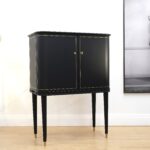

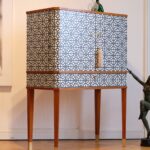
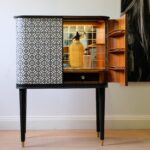
“Luxury drinks cabinet” is a search term that rarely brings a clear picture to mind. Some mean a piece with a high price, others high gloss and gold, others again a piece from a particular era. In this article we show how you can really recognise quality: by the material, the workmanship, the fittings and the interior. A drinks cabinet is only luxurious if it still looks and works the same in twenty years’ time. You will find an overview of all types and eras in our big drinks cabinet guide.
What really makes a luxury drinks cabinet
Luxury in furniture-making has little to do with shine and a great deal to do with substance. A high-quality drinks cabinet meets four criteria, all of which can be checked by hand and eye:
- Solid wood or blockboard in the carcass instead of chipboard. Tap the side: solid wood sounds bright and firm, chipboard dull.
- Real veneer with continuous grain. On a good piece, the veneer pattern runs across both doors, because the leaves come from the same trunk and were laid as a mirror image.
- Solid brass fittings. Handles, hinges and escutcheons in brass develop a patina over the years, whereas coated die-cast zinc flakes off.
- An interior that can be used. A mirrored back, glass holders, a pull-out or fold-down mixing shelf and compartments that take today’s bottles.
Old drinks cabinets from the 1930s to the 1960s almost always meet these criteria, because solid wood and veneer were standard at the time. A drinks cabinet from this period is, quite literally, a piece of luxury furniture, even if it was never called that.
Wooden drinks cabinet: mahogany, walnut, teak, rosewood
The wood determines the character and age of a drinks cabinet. Four woods are the ones you will meet most often:
- Mahogany with a reddish-brown, calm figure. Typical of Art Deco and Swedish Grace of the 1930s and 1940s, often with marquetry and curved fronts.
- Walnut with lively, dark grain. The wood of middle-class living rooms in the 1940s and 1950s.
- Teak in a warm golden brown. The wood of the 1950s and 1960s, light, oilable, unmistakably Scandinavian.
- Rosewood with dramatic black-brown figuring. The finest and today the rarest wood, strictly protected and available only from old stock.
With us, the wood often does not remain visible. We lacquer many pieces black and leave the veneer showing only on the inside or in details. The reason: the solid wood and the construction are the quality, the surface is the expression. A black-lacquered mahogany drinks cabinet is just as valuable inside as an unfinished one, but has a much stronger effect in a modern interior. You can read more on the choice of colour in the article Black drinks cabinet.
Details that make the difference
With design furniture, the detail decides. Look at three places where cheap reproductions always economise:
The back panel. On old quality furniture, the back panel is plywood set into grooves, not hardboard nailed on. Inside, it is often mirrored or lacquered in a contrasting colour.
The edges and feet. Solid plinth mouldings, turned or tapering legs in solid wood, cleanly dovetailed drawers. Where chipboard has been used, the edges are covered with edging strip and feel sharp.
The finishing. Gold leaf, brass profiles, hand-painted patterns or leather covering set a piece apart from the mass-produced. One example from our workshop is the drinks cabinet with gold leaf in the Swedish Modern style: a carcass from the 1940s, lacquered black, the fronts covered with real gold leaf. Or the drinks cabinet with gold diamonds from the 1960s, where a geometric gold pattern carries the plain form.
Restored rather than new: the more honest luxury
New luxury drinks cabinets from designer brands quickly cost five-figure sums and are often still built from veneered MDF. A restored drinks cabinet from the 1940s to the 1960s offers the same or better substance at a fraction of the price, plus uniqueness: no second piece looks exactly the same. During restoration we strip old layers of lacquer, fill veneer damage, replace defective hinges and lighting, polish or renew fittings and rebuild the interior so that today’s bottles fit. The redesign follows: colour, pattern, gold leaf or brass, depending on the piece. We describe the process on the Restorations page and in the article The process behind a redesigned piece of furniture.
What a luxury drinks cabinet costs
Our restored and redesigned drinks cabinets are priced between €2,300 and €3,850 including VAT and free delivery by furniture haulage within Germany. The price depends on the era, the wood, the condition and the effort involved in the redesign. A piece with gold leaf or a hand-painted pattern sits at the upper end, a plain black-lacquered cabinet at the lower. For comparison: an unrestored piece from a flea market costs €300 to €900, plus 40 to 80 hours of work and materials if you want to put it right yourself. You can see all available pieces in the Drinks cabinets category.
Frequently asked questions
Is a solid wood drinks cabinet better than a veneered one?
Not necessarily. High-quality furniture combines both: a stable carcass of solid wood or blockboard and fronts with fine veneer, because large surfaces in solid wood would warp. What matters is that there is no chipboard core beneath the veneer.
How can I recognise a reproduction?
By edging-strip edges, a nailed-on hardboard back, fittings in lightweight die-cast metal and a veneer pattern that breaks off abruptly at the door edges. Old pieces also show signs of use on handles and interior surfaces that cannot be imitated.
How do I care for a lacquered drinks cabinet?
With a soft, slightly damp cloth, without abrasives or silicone furniture polish. Wipe gold leaf and brass dry only. Avoid direct sunlight, which bleaches lacquer and veneer.