
White, Green, Grey or Beige Display Cabinet: The Colour Guide

The colour of a display cabinet depends on two things that play no part with other furniture: what stands behind the glass and what can be seen through the glass. A white display cabinet with white plates is a white block; a green display cabinet with a black interior and brass is a jewel. This article goes through the usual colours, white, grey, green, brown, yellow, red and beige, explains which rooms and cabinets they suit, and how the interior should be chosen for each colour. Black is a world of its own and is covered under Black display cabinet. The article is part of our large guide to the display cabinet.
White display cabinet: the Gustavian starting point
White is the oldest choice, the Gustavian tradition, and suits bright rooms with light floors. But white behind glass is difficult: everything light inside disappears, and against a white background the glass reflects the room more strongly than against a dark one. A white display cabinet therefore needs a dark or patterned interior in grey-green, dark blue, fabric or wallpaper. Choose an off-white with a hint of grey or yellow, never chalk white, which turns old furniture into bathroom cabinets. White suits Gustavian and Louis XVI cabinets; on Rococo and heavy oak it looks bulky. Anyone looking for a white display cabinet with wood will most likely get a white-finished carcass with wooden details or a cabinet with light veneer. High-gloss white belongs more in modern furniture stores; on antique furniture satin is more convincing. And the corner display cabinet in white? It too gains its appeal only through a darker interior. Incidentally, almost all white old cabinets have been painted over at a later date; the Gustavian original was pearl grey.
Grey: the safest choice
Grey, especially Gustavian pearl grey and warm grey, works in most rooms. It is light enough for light floors and dark enough to carry light objects. A grey display cabinet with a white interior looks like a Gustavian salon, with a black interior like a gallery. Grey suits all periods except the teak of the 1950s. We finish most Gustavian and Louis XVI cabinets that are not to be black in grey and combine them with brass fittings, which glow against the matt ground.
Green display cabinet: the colour that turns the cabinet into a picture
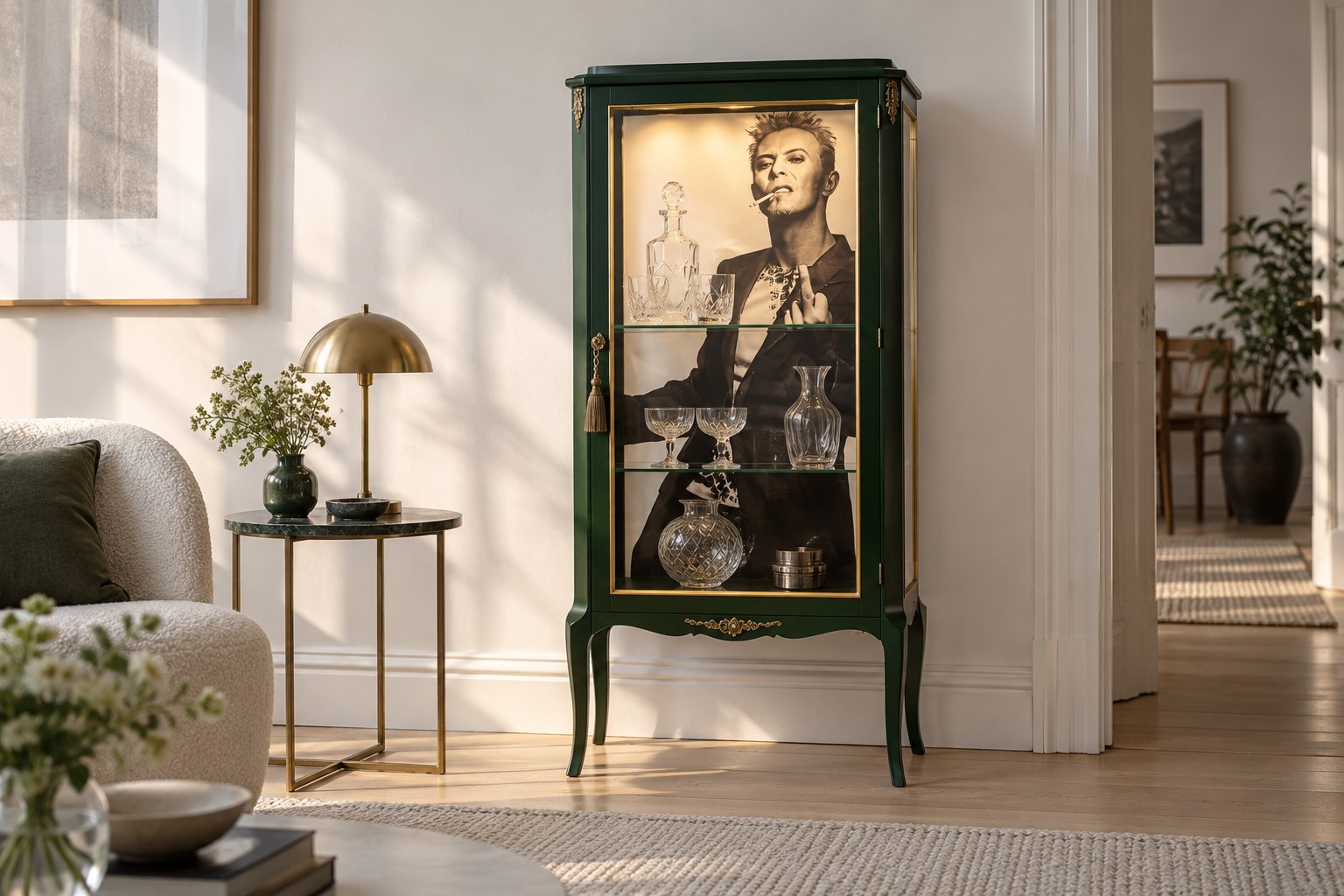
After black, green is the most sought-after colour, and it has the greatest effect. Dark green, bottle green or grey-green on a Louis XVI cabinet with brass beading prompts guests to ask where it came from. One example is the green Gustavian display cabinet with a Josef Frank motif. The inside should be light, golden or patterned: green outside and green inside becomes an aquarium. Green suits rooms with a lot of wood and rooms with white walls. With coloured walls, green must either match the tone of the wall exactly or be clearly darker. Light green and mint green are the colours of the 1950s and suit small cabinets, see Wall-hung and small display cabinets.
Brown, dark brown and beige
A brown display cabinet is usually a cabinet of dark wood, mahogany or walnut, rather than a lacquered one. You can read more in Wooden display cabinet. Lacquered in dark brown, chocolate brown or tobacco brown, brown is an underrated choice: like black, only warmer, suited to rooms with a lot of textiles and leather. Beige and sand are the colours of the 1970s and of Scandinavian interiors today. A display cabinet in beige works only with a dark interior, otherwise it becomes an invisible box. A beige cabinet with a black interior and brass is surprisingly elegant.
Yellow and red: when the cabinet is to be the colour of the room
Yellow and red display cabinets are often searched for and rarely bought, for good reason: they take over the room. They work where everything else is neutral, white, grey, wood, and the cabinet remains the only colour. Ochre yellow on a Gustavian cabinet with a grey interior is the colour of rural furniture and suits a country kitchen. English red or oxblood on a Louis XVI cabinet with gold beading is the most dramatic thing we do and needs a room with a dark floor. Both colours should be matt; glossy, they look like plastic.
The interior decides the exterior colour
The rule that sums it all up: outside and inside should differ in lightness. Dark outside, light or patterned inside; light outside, dark inside. The exception is black on black, see Black display cabinet. The interior can be painted, covered with fabric or wallpaper, or be a photograph, and it is always the least expensive way of changing a cabinet that already has the right colour outside. How to arrange the contents afterwards is explained in Styling a display cabinet. You will find all current cabinets in the Display cabinets category. We also lacquer customers’ cabinets in the colour they want.
Frequently asked questions
What colour are old Swedish display cabinets usually?
Visible wood, birch or mahogany. Painted old cabinets are usually grey or white and almost always painted over at a later date.
Should the display cabinet be the same colour as the wall?
Either exactly the same tone, in which case the cabinet disappears and only the contents show, or clearly darker or lighter. Almost the same colour looks like a mistake.
Can you paint a display cabinet yourself?
Yes, but glass and moulded beading make it 20 to 40 hours of work with masking, sanding and three coats. A surface lacquered in the workshop cannot be matched with a brush.