
Swedish Grace vs. Art Deco: Two Design Styles Compared

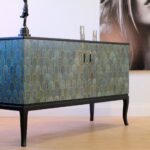
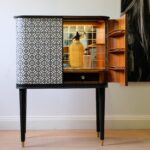
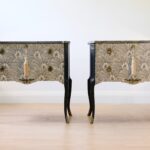

Swedish Grace and Art Deco are two design styles that are often compared with one another. Both emerged in the early twentieth century and share a focus on form, materials and aesthetics. At the same time, they differ clearly in expression, feeling and use.
For anyone interested in furniture and interiors, understanding the difference between these styles can be decisive, especially as they are often blended in modern homes.
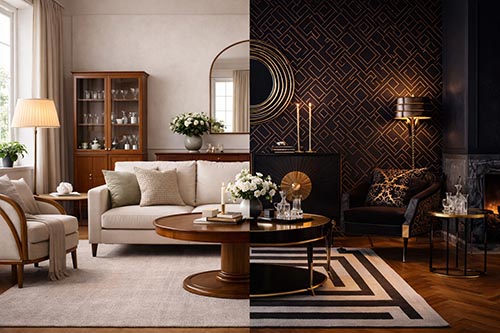
What is Swedish Grace?
Swedish Grace is a Swedish design style from the 1920s, characterised by balance, elegance and restraint. The focus is on proportions, materials and a harmonious whole rather than strong visual statements.
If you would like to read more about the basics of the style, see: What is Swedish Grace?
What is Art Deco?
Art Deco is a more international design style that emerged during the same period. Unlike Swedish Grace, its expression is often more graphic, contrast-driven and decorative.
Art Deco works with clear shapes, strong lines and materials that create visual effect, rather than blending into the whole.
See examples of how this style takes shape in furniture: Art Deco drinks cabinet.
The key differences
| Swedish Grace | Art Deco |
|---|---|
| Restrained and balanced | Decorative and expressive |
| Focus on proportions | Focus on contrast and graphic design |
| Discreet details | Bold patterns and ornament |
| Calm, harmonious feel | Strong visual presence |
Which style suits your home?
The choice between Swedish Grace and Art Deco is often about the feeling you want to create in the room.
- Swedish Grace suits those who want a calm, balanced and timeless look
- Art Deco suits those who want to create contrast, drama and a distinct design character
In many modern homes, elements from both styles are combined. A room can, for example, be built around a calm Swedish Grace foundation, with the occasional Art Deco influence to add contrast.
Swedish Grace in modern interiors
Swedish Grace works particularly well in modern homes because the style does not compete with other elements. Instead, it creates a stable foundation that makes it easy to add personal details.
For inspiration, you can read: Swedish Grace in modern interiors.
What they have in common
Despite their differences, Swedish Grace and Art Deco share certain basic principles. Both styles place great importance on materials, craftsmanship and design.
This means that furniture from both styles is often of high quality with a clear design identity, which makes it attractive even today.
It is also why older furniture from these periods is often well suited to redesign. Read more about how such redesigned furniture can find new life in modern homes.
Swedish Grace and Art Deco represent two different ways of looking at design, but both show how form, materials and craftsmanship can create furniture that lasts.
The comparison in table form
| Swedish Grace | Art Deco | |
|---|---|---|
| Origin | Sweden, 1920–1930 | France, 1920–1939 |
| Inspiration | Gustavian Neoclassicism | Cubism, Egypt, the machine |
| Woods | Birch, elm, mahogany | Macassar ebony, rosewood, burr walnut |
| Finish | Polish, matt to satin sheen | High gloss, lacquer, mirrored glass |
| Metal | Brass, discreet | Chrome, nickel, conspicuous |
| Ornament | Marquetry, small medallions | Geometry, fans, steps |
| Form | Slender, symmetrical, straight | Curved, bombé, plinth |
| Effect | Calm elegance | Drama and luxury |
The hybrids: Swedish furniture that is both
Many Swedish pieces from the late 1920s defy classification. A drinks cabinet by Nordiska Kompaniet from 1929 may have the curved front and plinth of Art Deco, but the birch veneer and marquetry of Swedish Grace. These are the pieces we like best, because they have the drama of Art Deco without its heaviness. In our Drinks cabinets category, most of the 1930s pieces are hybrids of this kind. For what counts as pure Art Deco, see the article Art Deco furniture; for pure Swedish Grace, see Swedish Grace furniture: design language.
Frequently asked questions
Which style is more expensive?
Signed French Art Deco is the most expensive in the world. Among Swedish serially produced furniture, both styles cost roughly the same, €300 to €1,500 unrestored.
Can I have both styles in the same room?
Yes, if the finishes match. Black lacquer on a Swedish Grace chest of drawers and an Art Deco drinks cabinet makes them a family.
Which style is easier to furnish with?
Swedish Grace. It is calm and tolerates company. Art Deco requires the rest of the room to hold back.